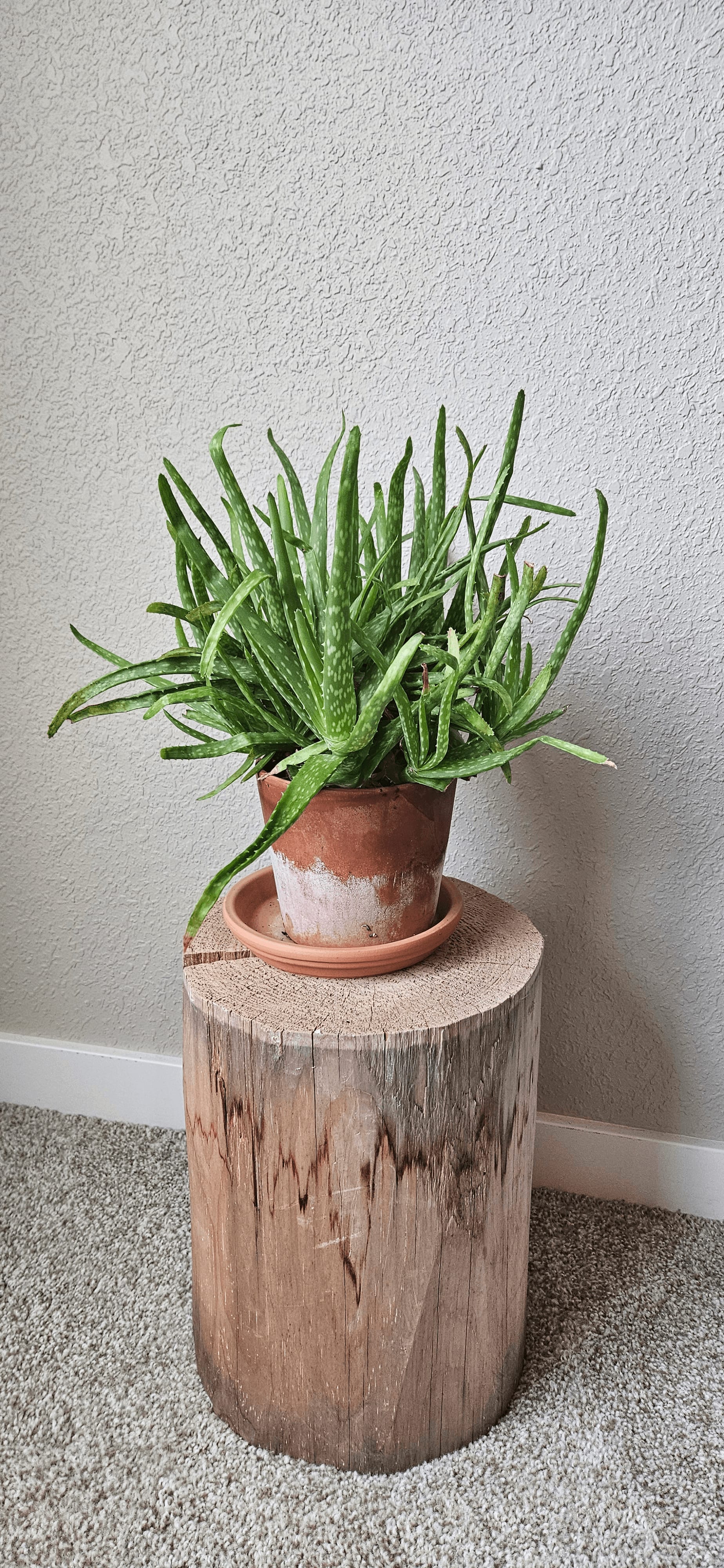
Aloe vera is a stemless or very short-stemmed plant growing to 60–100 centimetres (24–39 inches) tall, spreading by offsets.
Leaves
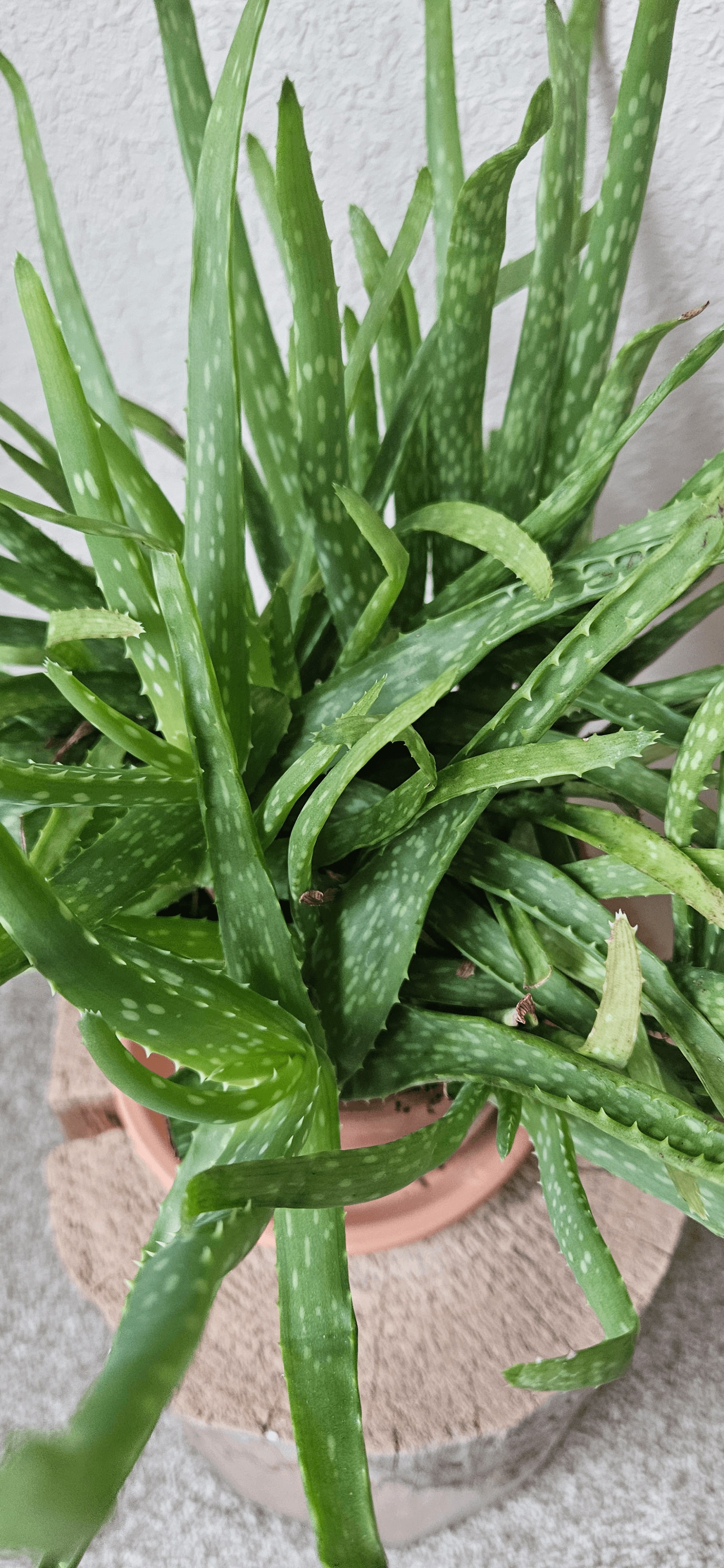
The leaves are thick and fleshy, green to grey-green, with some varieties showing white flecks on their upper and lower stem surfaces. The margin of the leaf is serrated and has small white teeth.
Aloe vera leaves contain phytochemicals under study for possible bioactivity, such as lignans, phytosterols, polyphenols, acetylated mannans, polymannans, anthraquinone C-glycosides, anthrones, and other anthraquinones, such as emodin and various lectins.
Flowers
The flowers are produced in summer on a spike up to 90 cm (35 in) tall, each flower being pendulous, with a yellow tubular corolla 2–3 cm (3⁄4–1+1⁄4 in) long. Like other Aloe species, Aloe vera forms arbuscular mycorrhiza, a symbiosis that allows the plant better access to mineral nutrients in soil.
![Image of the [object Object] plant](https://res.cloudinary.com/dy8loseyh/image/upload/f_auto,q_auto/v1720047399/aloe_725d4b206c.png)
Photo credit to Lauren Keller
Aloe Vera
Asphodelaceae Family
Also known as Aloe Vera
Aloe Vera is a succulent plant species of the genus Aloe. It is widely distribute, and is considered an invasive species in many world regions.
This plant is a
succulent
Dry
Soaked
1-2 times a week, always use your finger to test the soil before you water. They like to dry out between waterings. I typically wait until the stems start to feel less taut.
Shade
Direct
Direct sun
Starved
Full
Aloe is used to poor soil conditions but if you want to feed yours, only feed once during the growing season.