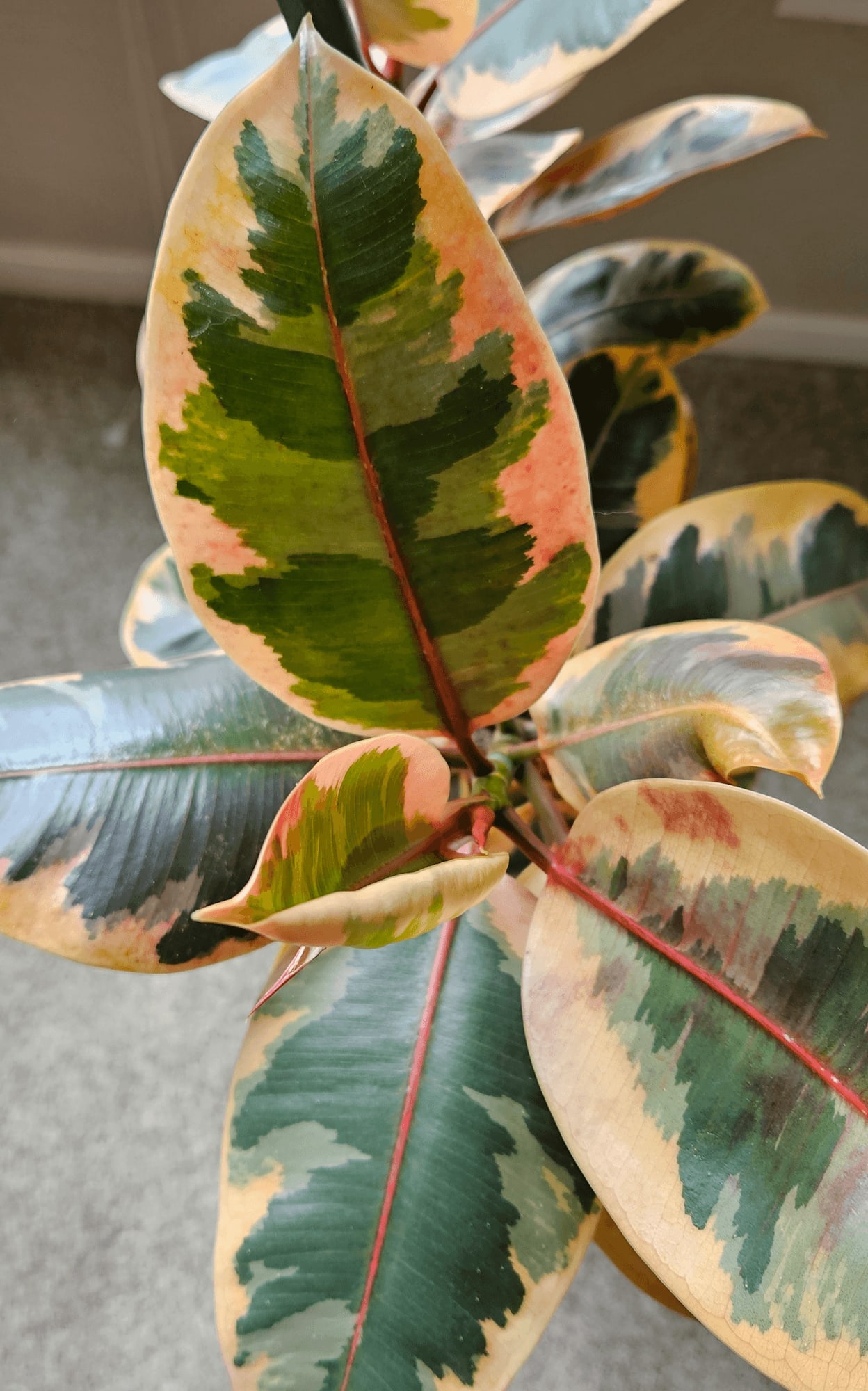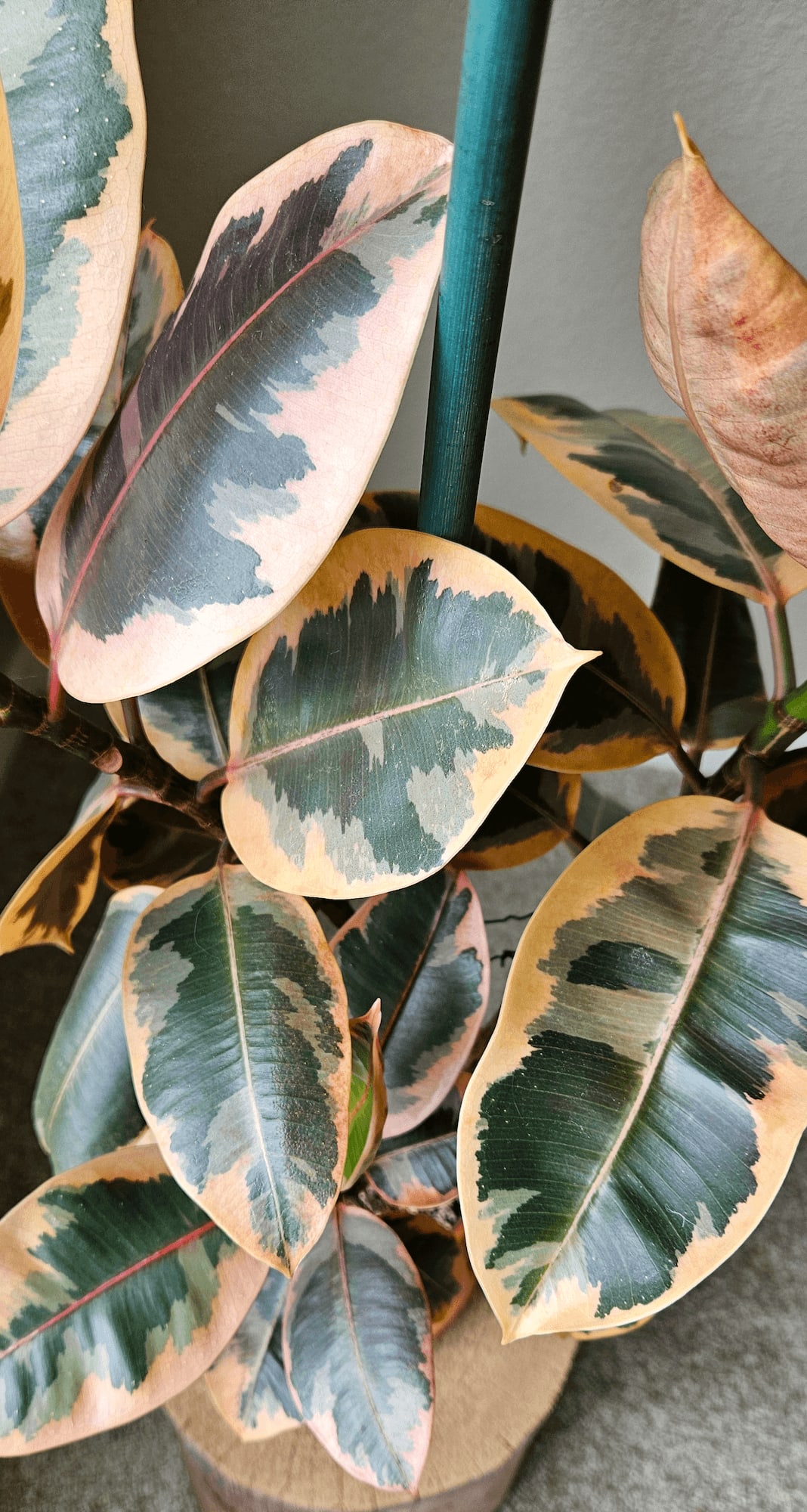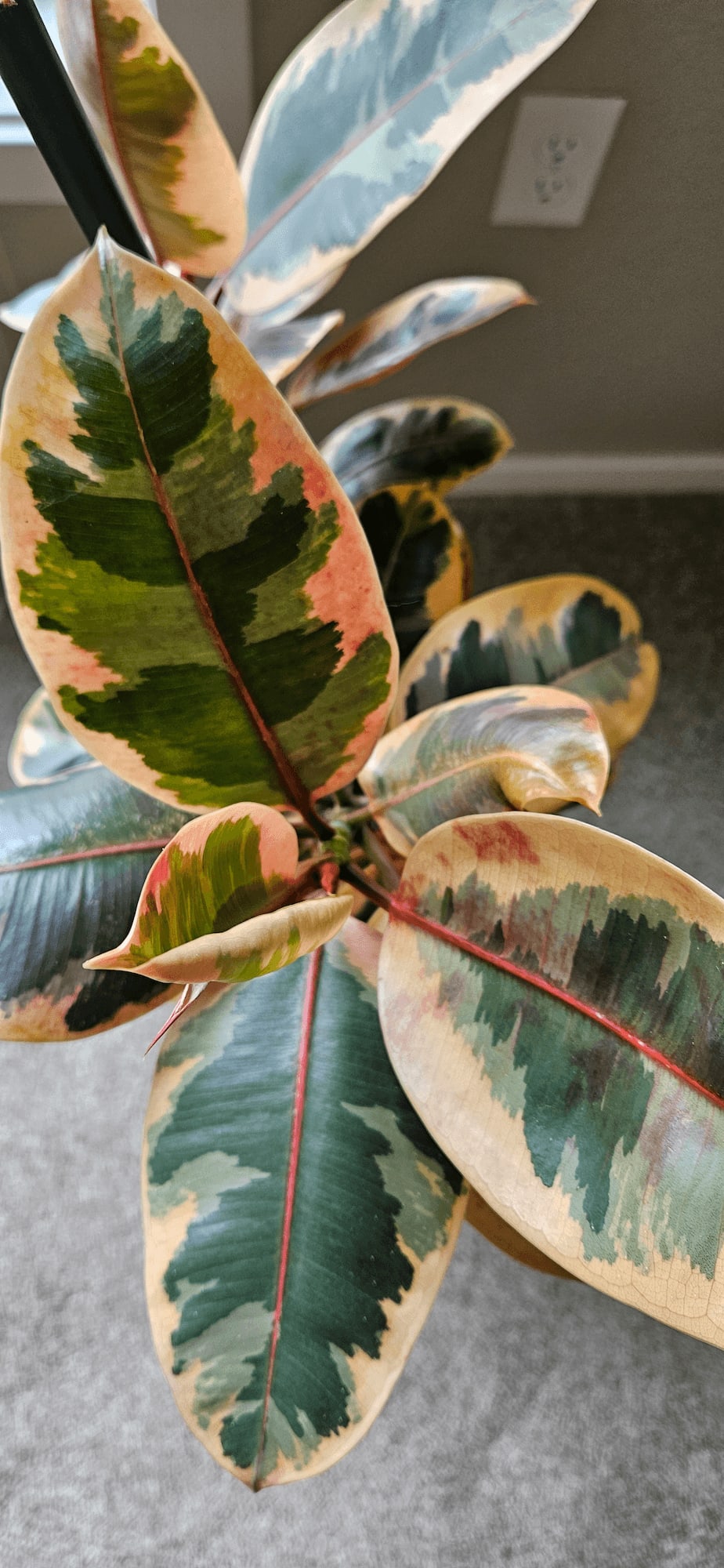
It is a large tree in the banyan group of figs, growing to 30–40 m (100–130 ft) – rarely up to 60 m or 195 ft – tall, with a stout trunk up to 2 m (6 ft 7 in) in diameter. The trunk develops aerial and buttressing roots to anchor it in the soil and help support heavy branches.
It has broad shiny oval leaves 10–35 cm (4–14 in) long and 5–15 cm (2–6 in) broad; leaf size is largest on young plants (occasionally to 45 cm or 17+1⁄2 in long), much smaller on old trees (typically 10 cm or 4 in long). The leaves develop inside a sheath at the apical meristem, which grows larger as the new leaf develops. When it is mature, it unfurls and the sheath drops off the plant. Inside the new leaf, another immature leaf is waiting to develop.
![Image of the [object Object] plant](https://res.cloudinary.com/dy8loseyh/image/upload/f_auto,q_auto/v1720525123/ficus_elastica3_e5a638e739.png)
Photo credit to Lauren Keller
Ficus Elastica (Ruby)
Moraceae Family
Also known as Ficus Elastica Ruby
Ficus elastica, the rubber fig, rubber bush, rubber tree, rubber plant, or Indian rubber bush, Indian rubber tree, is a species of flowering plant in the family Moraceae, native to eastern parts of South and Southeast Asia.
This plant is an
epiphyte
Dry
Soaked
Ficus Elastica doesn't like to sit in wet soil. When watering the plant, make sure the top 2 inches are dry and the soil is still aerated.
Shade
Direct
This plant thrives a foot or two away from a south-facing window.
Starved
Full
Typical fertilizer frequency. Once a month during the growing season. Do not fertilize during the fall or winter months.