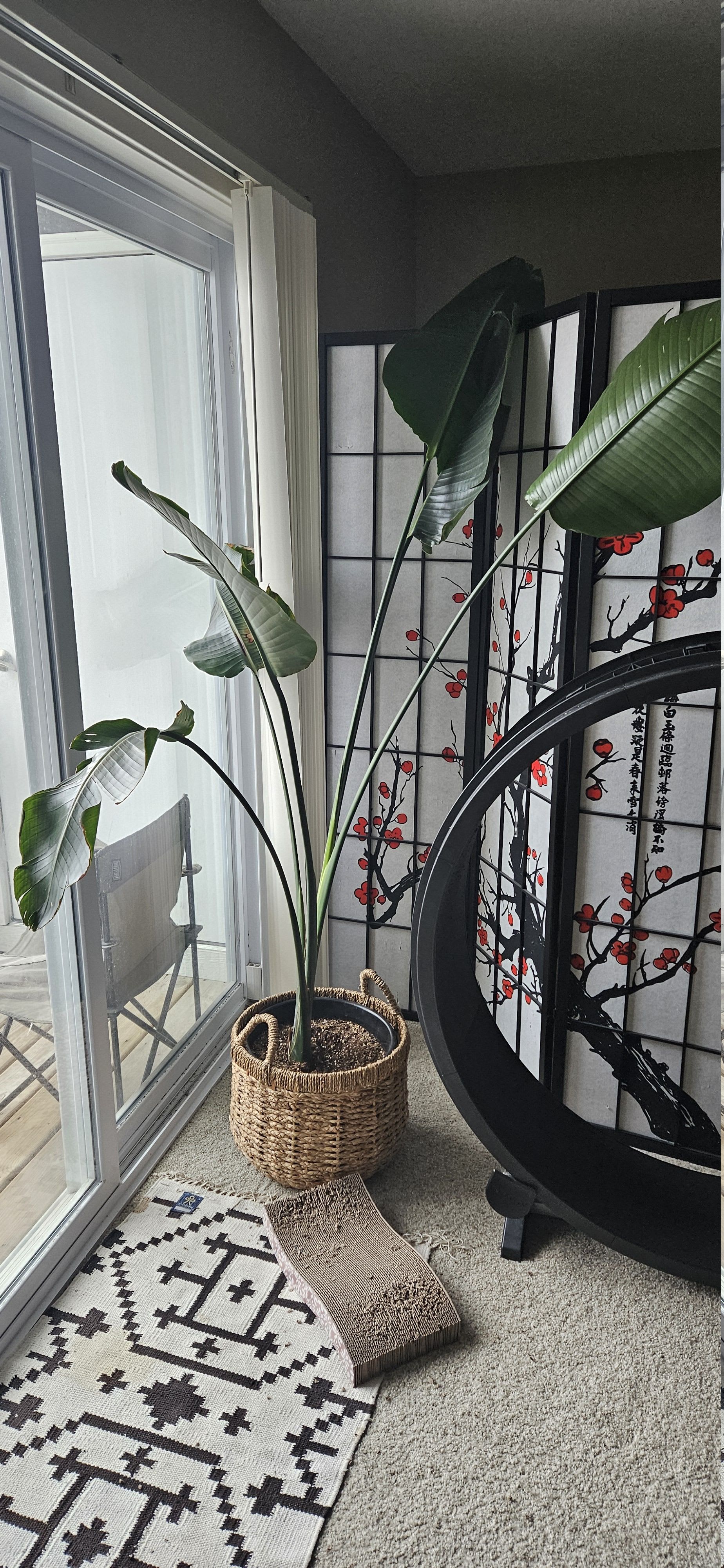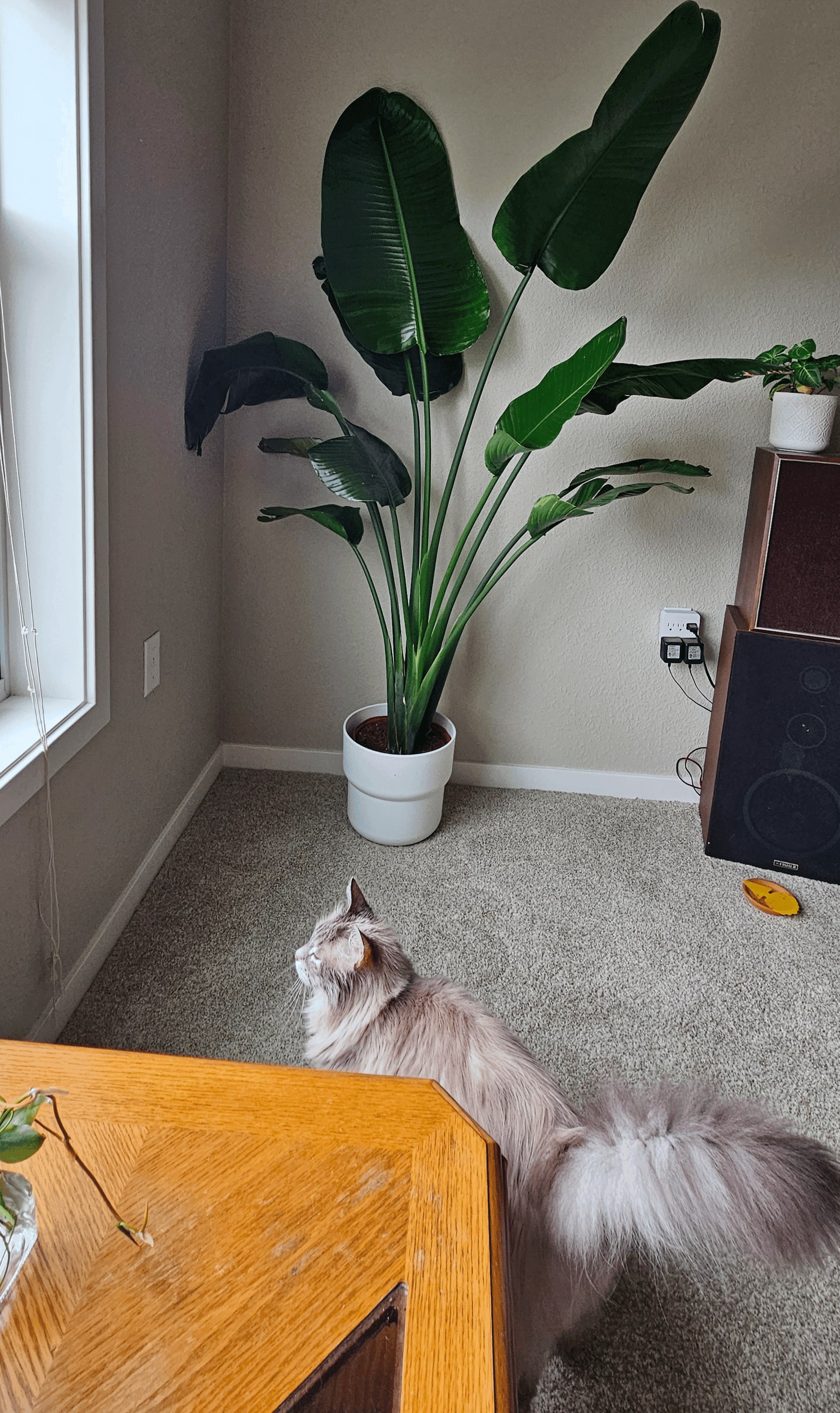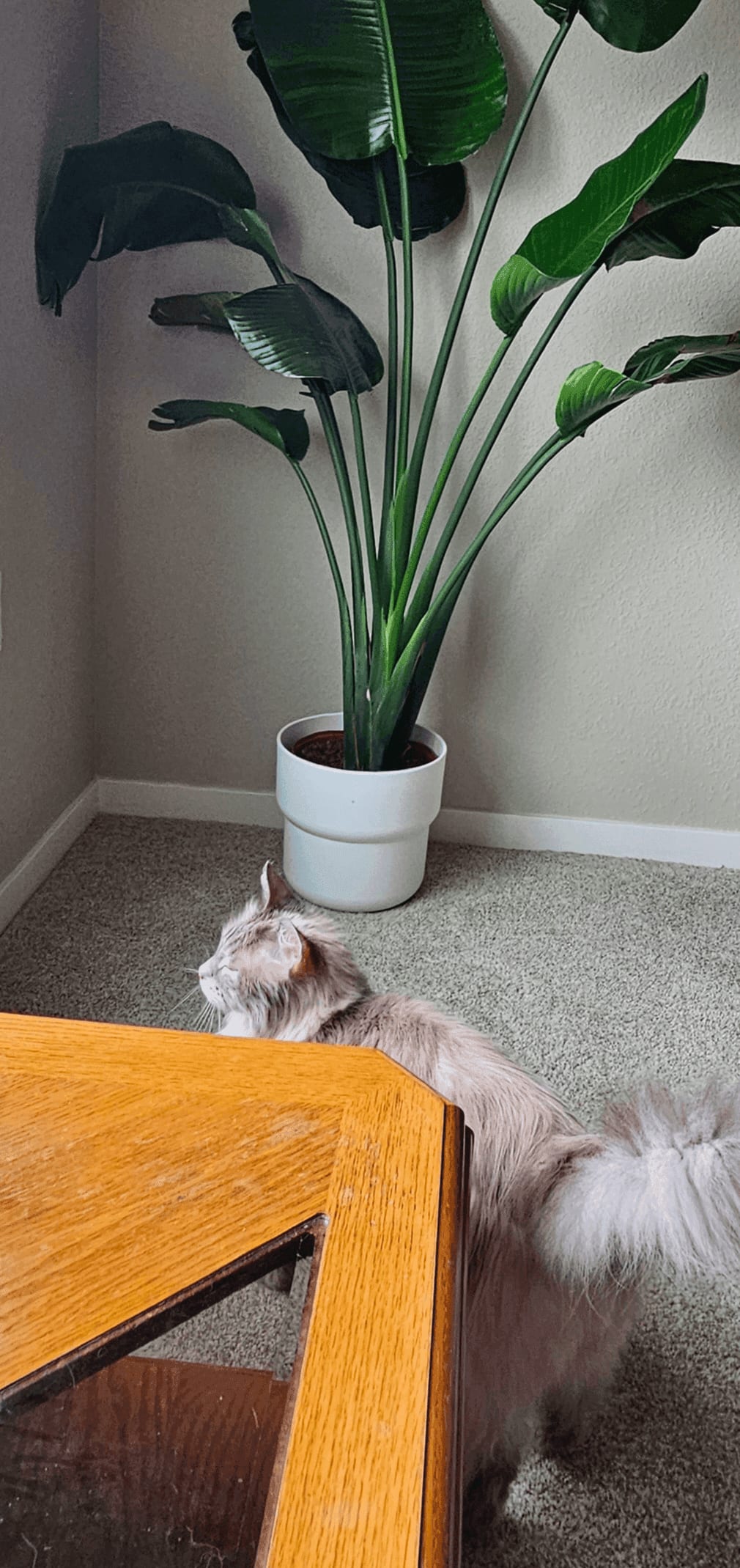
The plant grows to 2 m (6+1⁄2 ft) tall, with large, strong leaves 25–70 cm (10–28 in) long and 10–30 cm (4–12 in) broad, produced on petioles up to 1 m (40 in) long. The leaves are evergreen and arranged in two ranks, making a fan-shaped crown. The flowers stand above the foliage at the tips of long stalks. The hard, beak-like sheath from which the flower emerges is termed the spathe. This is placed perpendicular to the stem, which gives it the appearance of a bird's head and beak; it makes a durable perch for holding the sunbirds which pollinate the flowers. The flowers, which emerge one at a time from the spathe, consist of three orange sepals and three purplish-blue or white petals. Two of the petals are joined together to form an arrow-like nectary. When the sunbirds sit to drink the nectar, the third petal opens to release the anther and cover their feet in pollen.
![Image of the [object Object] plant](https://res.cloudinary.com/dy8loseyh/image/upload/f_auto,q_auto/v1721129978/birdsofparadise_48267c7a1c.png)
Photo credit to Lauren Keller
Strelitzia Reginae
Strelitziaceae Family
Also known as Birds of Paradise
The distinctive bird of paradise (Strelitzia spp.) is one of the best-known tropical flowers. It is closely related to the banana plant. The bird of paradise plant is named for closely resembling the tropical bird of the same name.
This plant is an
evergreen
Dry
Soaked
Water every 1-2 weeks. The more light your plant gets, the more often you'll need to water it. Allow the soil to dry out on the top before watering it again.
Shade
Direct
Full sun to partial shade
Starved
Full
You can fertilize your plant every two to three weeks during the growing season.