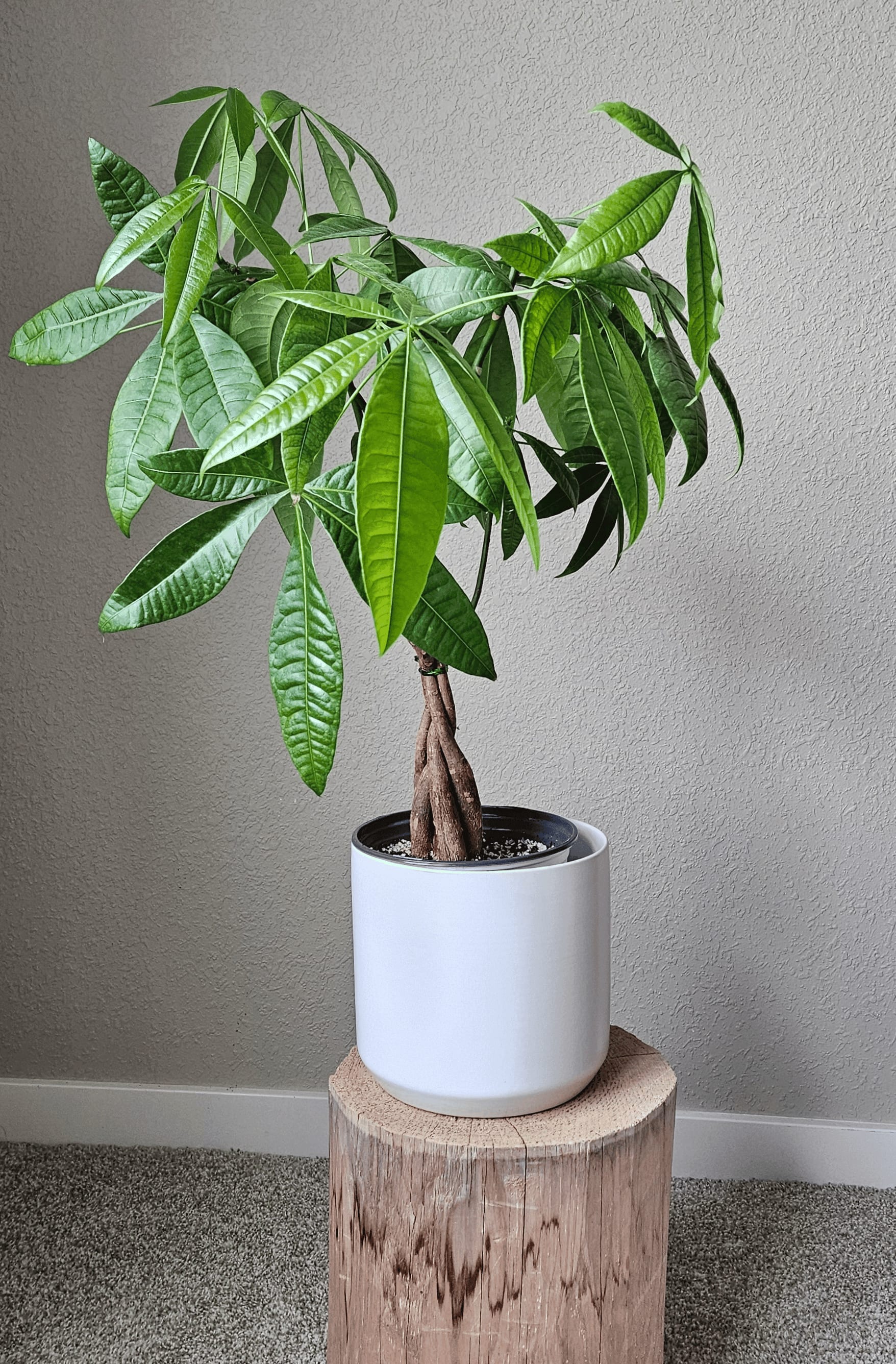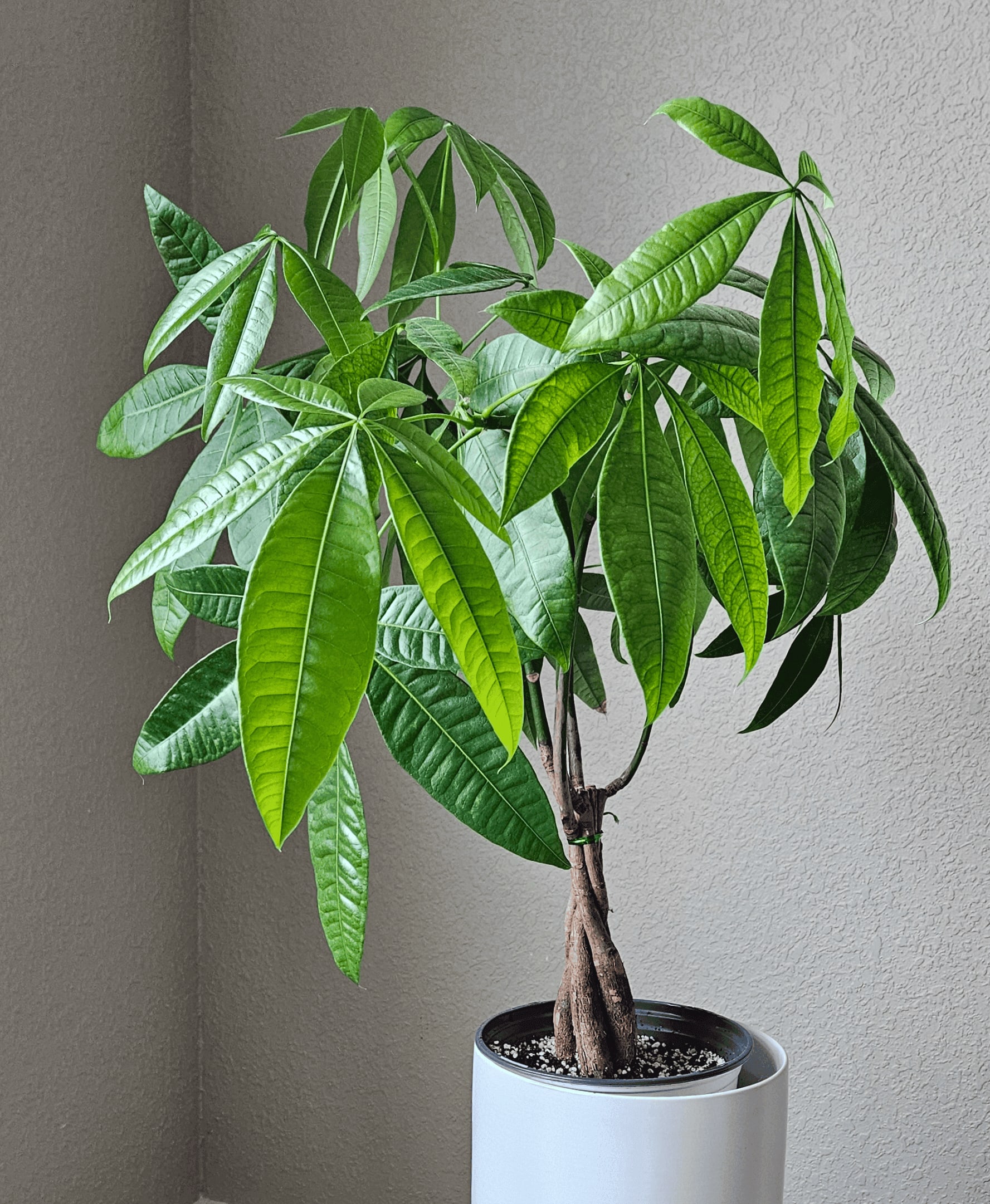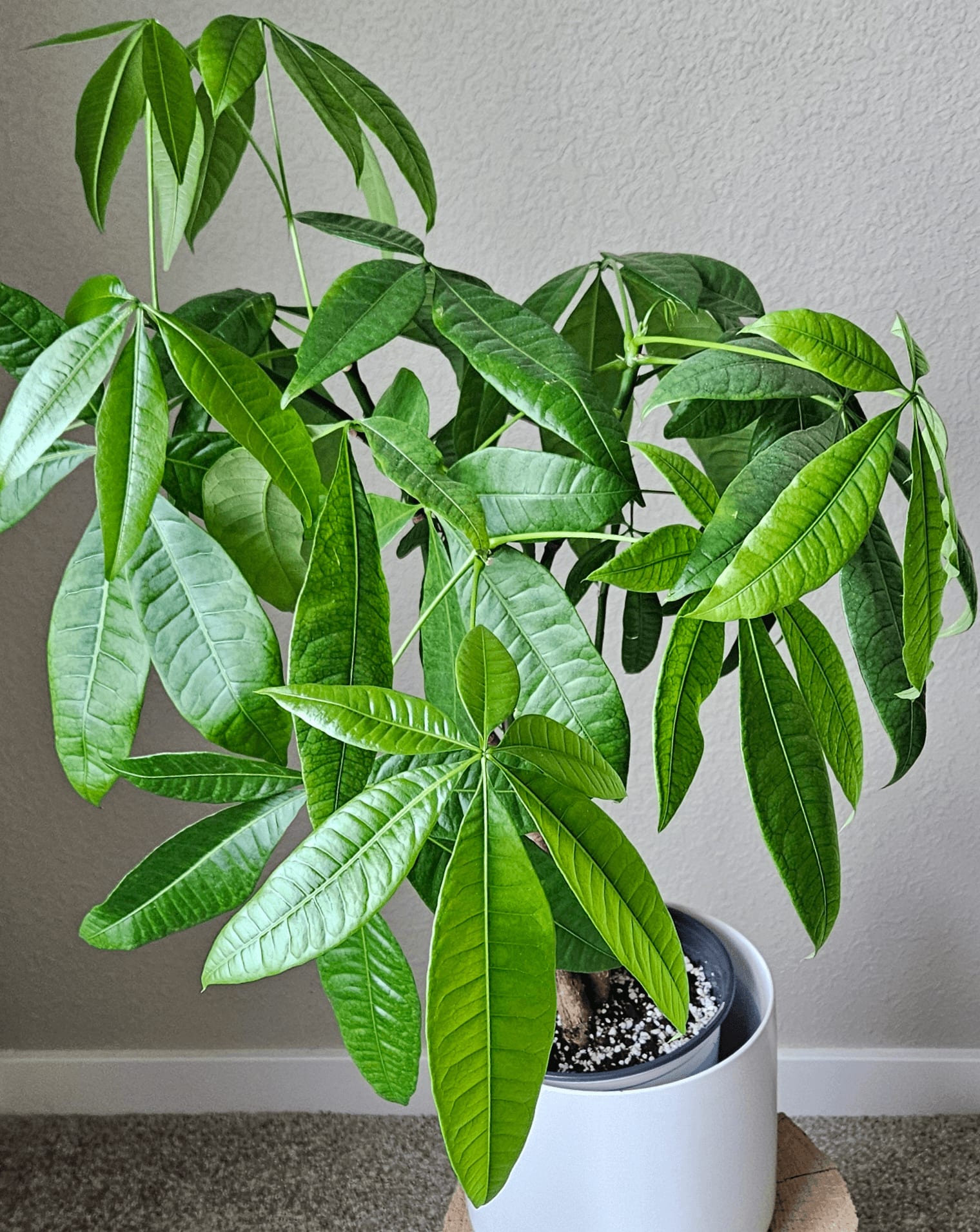
Pachira aquatica can grow up to 18 meters or 60 feet in height in the wild. It has shiny green palmate leaves with lanceolate leaflets and smooth green bark. This species forms a slightly thickened root with smaller roots or roots, which also serves as a water reservoir. The relatively smooth bark is brown through gray and slightly cracked; young branches are green. Outdoors, P. aquatica produces a broad crown. The transitional and long-stalked, composite hand-shaped, slightly leathery leaves are arranged at the branch ends. The petiole is up to 24 cm long. The leaves are bright green and shiny and consist of up to nine leaflets (fingers). The mostly glabrous, short-stalked leaflets are up through 28 cm long and rounded through round pointed, spiked, or pointed. They are lanceolate or obovate, with a light middle veins. There are sloping stipules present. The leaves and flowers are also often eaten.
Its showy flowers, among the largest tree flowers in the world, have long, narrow petals that open like a banana peel to reveal hairlike yellowish orange stamens. The greenish-yellow or cream-colored, hermaphroditic and very large, short and thick-stalked flowers with double perianth resemble shaving brushes through the long stamens.
![Image of the [object Object] plant](https://res.cloudinary.com/dy8loseyh/image/upload/f_auto,q_auto/v1721083891/money_tree_b1c2e41207.png)
Photo credit to Lauren Keller
Pachira Aquatica
Malvaceae Family
Also known as Money Tree
Pachira aquatica is a tropical wetland tree in the mallow family Malvaceae, native to Central and South America where it grows in swamps. It is known by its common names Malabar chestnut, French peanut, Guiana chestnut, Provision tree, Saba nut, Brazil, Guatemala and is commercially sold under the names Money tree and Money plant. This tree is sometimes sold with a braided trunk and is commonly grown as a houseplant, although more commonly what is sold as a "Pachira aquatica" houseplant is in fact a similar species, P. glabra.
This plant is a
tree
Dry
Soaked
Water whenever the top inch of the soil is dry.
Shade
Direct
Money Tree's like medium-bright indirect light to full sun. Be careful not to shock the plant if it's used to lower lighting conditions. Bringing the plant into full sun might show some damage in the first few weeks.
Starved
Full
Fertilize monthly during the growing season.