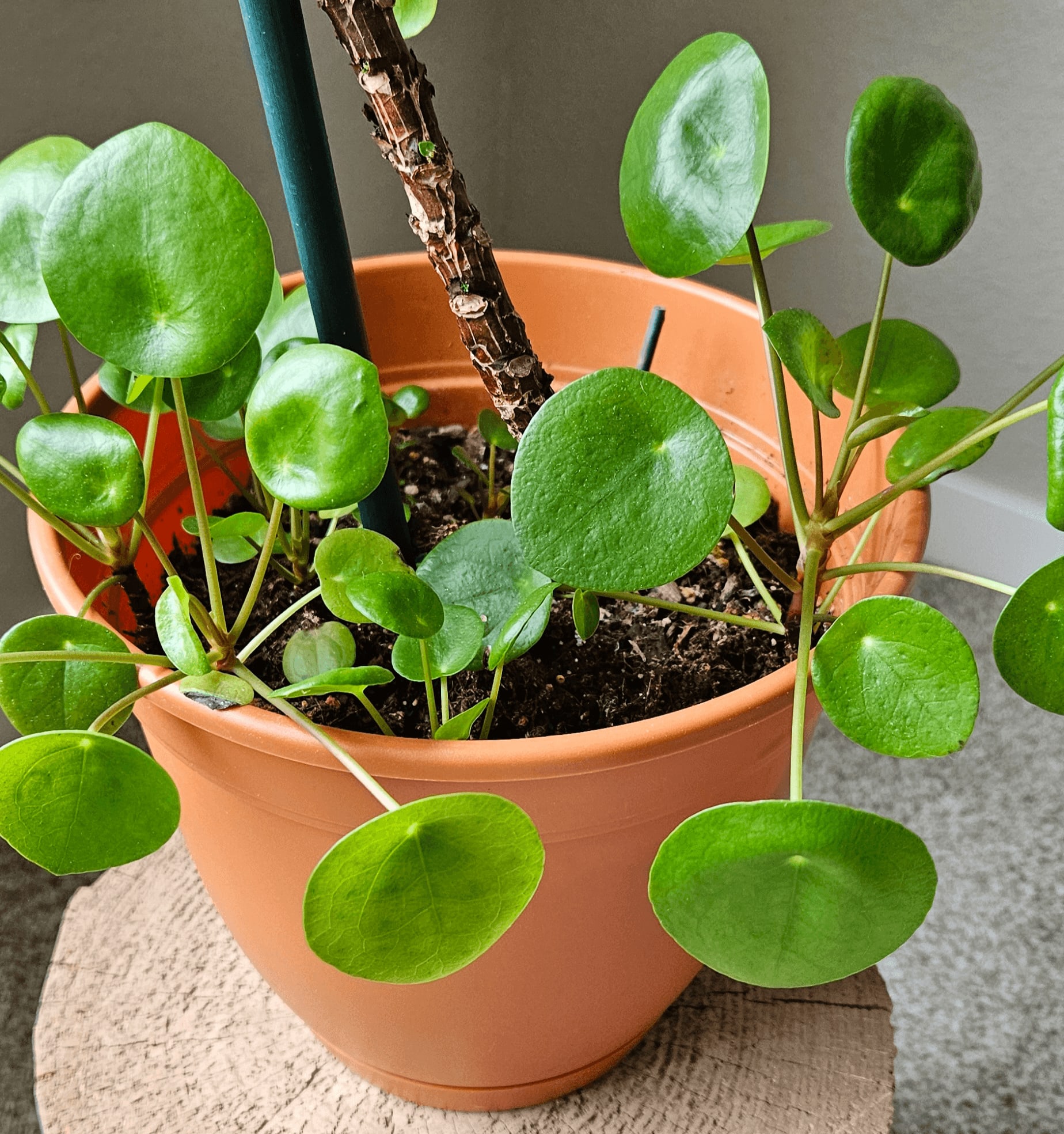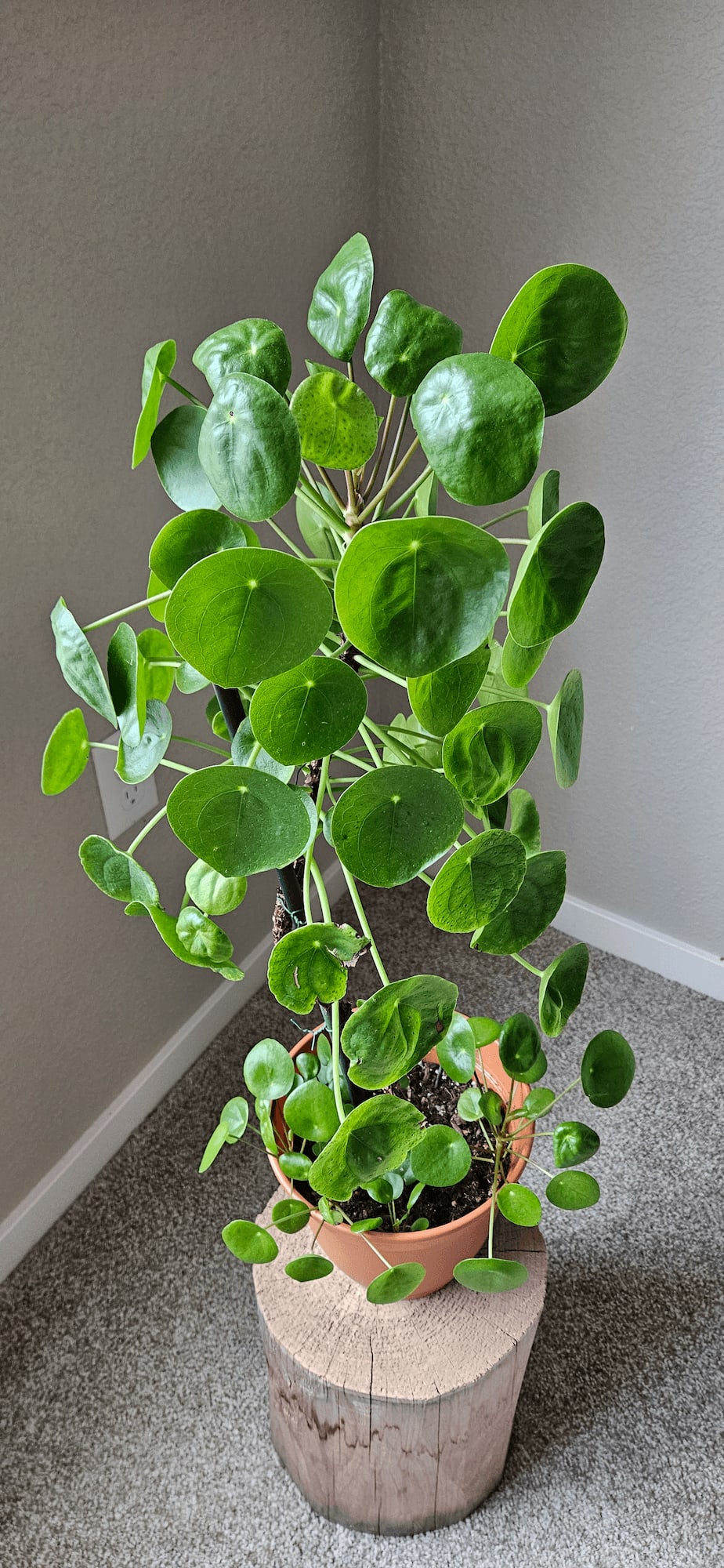
Pilea peperomioides is an erect, evergreen perennial plant, with shiny, dark green, circular leaves up to 10 cm (4 in) in diameter on long petioles. The leaves are described as peltate—circular, with the petiole attached near the centre. The plant is completely hairless. It grows to around 30 cm (12 in) tall and wide in the wild. Indoors, it has the potential to grow larger. The stem is greenish to dark brown, usually unbranched and upright, and lignified at the base when mature. In poor growing conditions, it loses its leaves in the lower part of the stem and assumes a distinctive habit. The flowers are inconspicuous.
The plant has a superficial resemblance to some species of Peperomia (hence the specific epithet peperomioides), also popular as cultivated plants but in a different family, the Piperaceae. It is also sometimes confused with other peltate-leaved plants such as Nasturtium, Umbilicus and Hydrocotyle.
![Image of the [object Object] plant](https://res.cloudinary.com/dy8loseyh/image/upload/f_auto,q_auto/v1720553642/pilia_66d9067afc.png)
Photo credit to Lauren Keller
Pilia Peperomioides
Urticaceae Family
Also known as Chinese Money Plant
Pilea peperomioides aka the Chinese money plant, UFO plant, pancake plant, lefse plant or missionary plant, is a species of flowering plant in the nettle family Urticaceae, native to Yunnan and Sichuan provinces in southern China.
This plant is a
perennial
Dry
Soaked
Allow the plant to nearly dry out between waterings. When watering, make sure you water thoroughly and the soil is completely soaked.
Shade
Direct
Partial sun exposure, they thrive in medium to bright indirect light.
Starved
Full
Feed regularly, once a month, during the growing seasons.