Snake plants are native to West Africa's tropical regions. Specifically from Nigeria to the Congo.
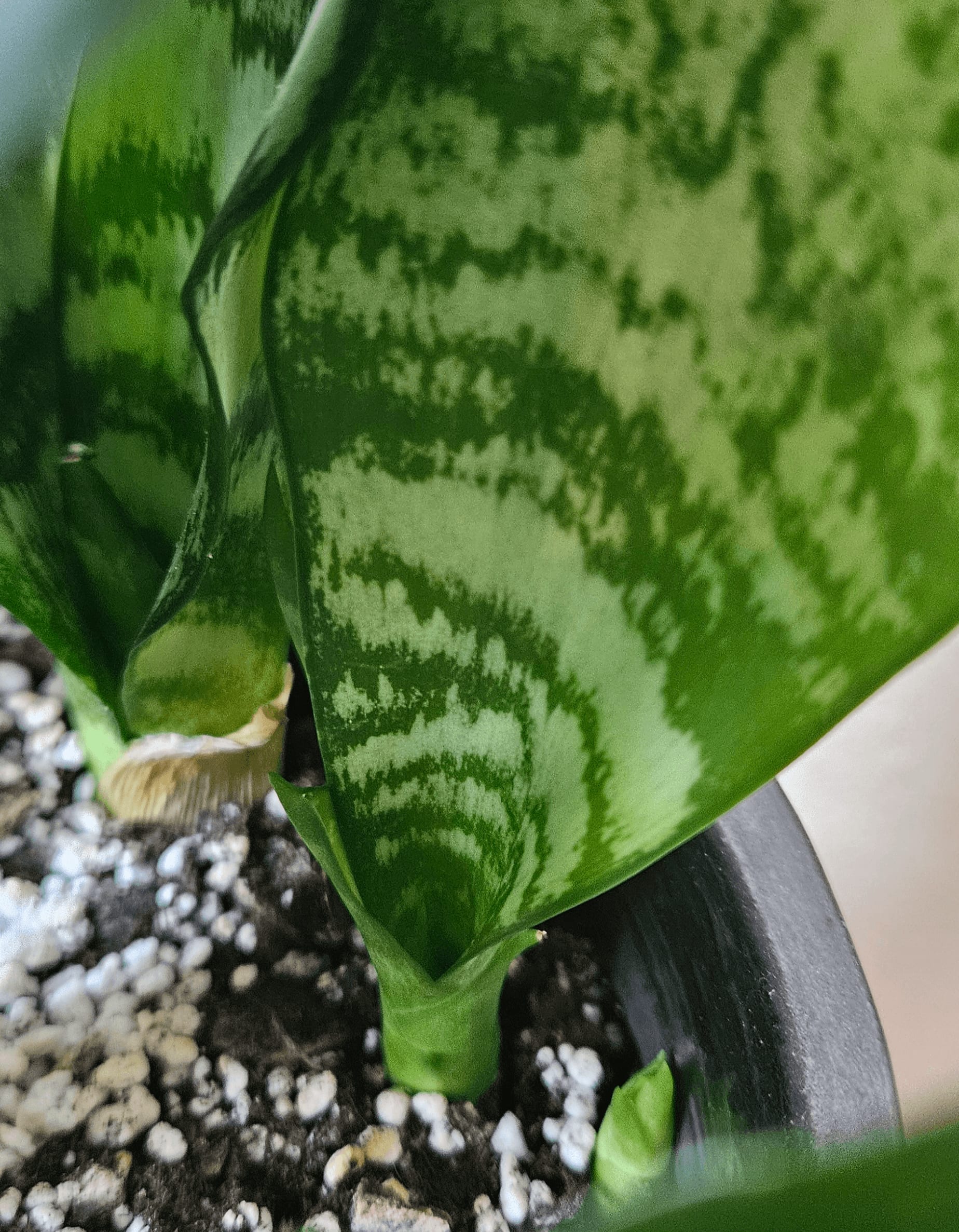
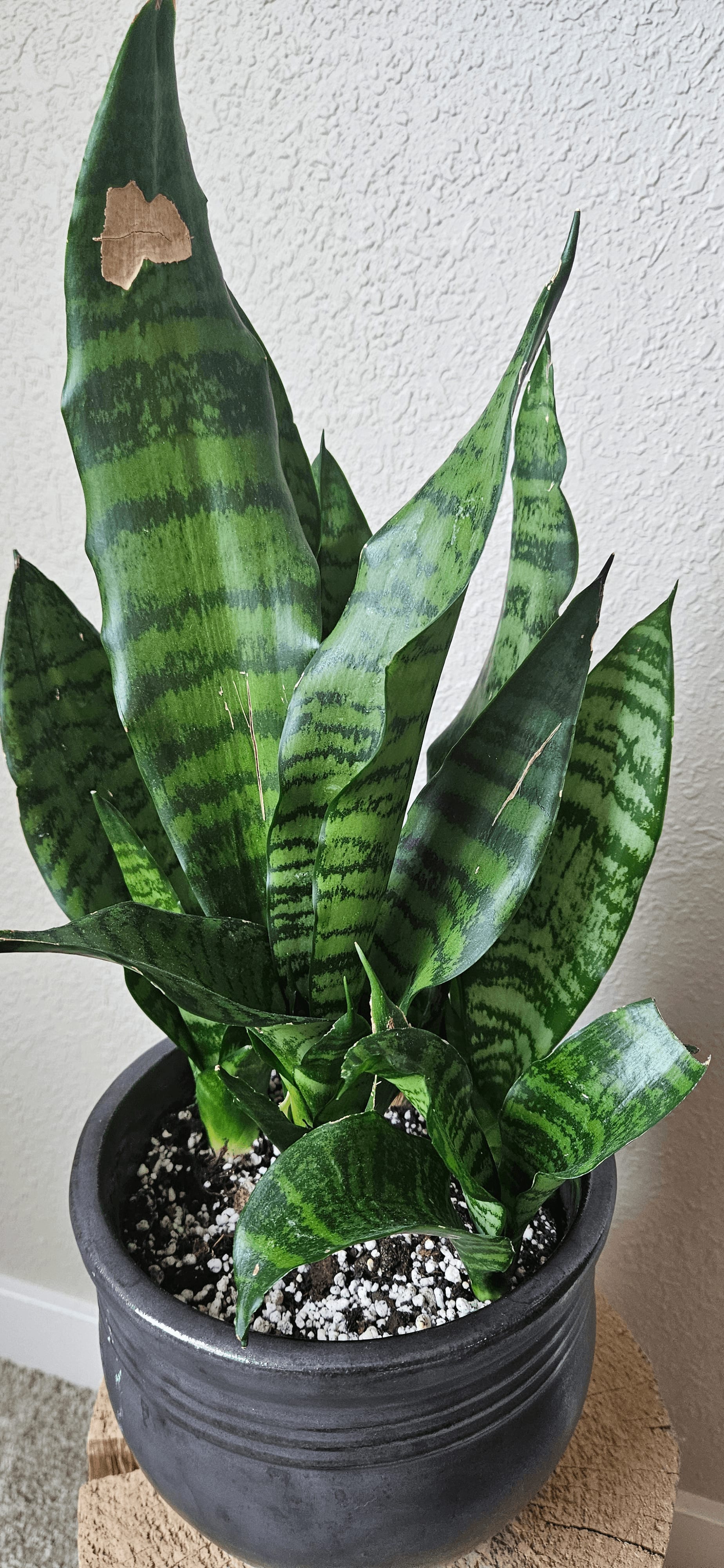
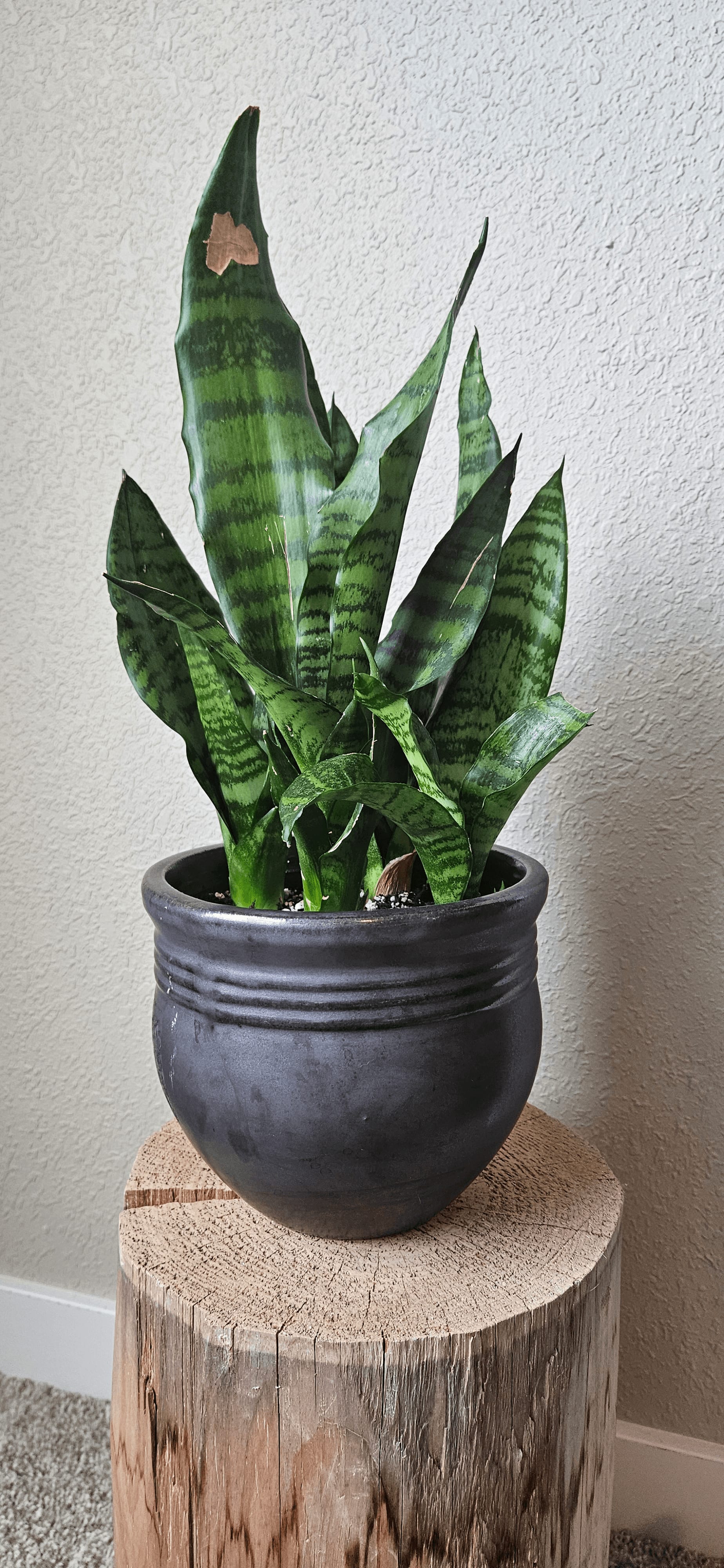
It is an evergreen perennial plant forming dense strands, spreading by way of its creeping rhizome, which is sometimes above ground, sometimes underground. Its stiff leaves grow vertically from a basal rosette. Mature leaves are dark green with light gray-green cross-banding and usually range from 70–90 centimetres (2.3–3.0 ft) long and 5–6 centimetres (2.0–2.4 in) wide, though it can reach heights above 2 m (6 ft) in optimal conditions.
The specific epithet trifasciata means "three bundles".
The plant exchanges oxygen and carbon dioxide using the crassulacean acid metabolism process, which allows them to withstand drought. The microscopic pores on the plant's leaves, called the stomata and used to exchange gases, are opened only at night to prevent water from escaping via evaporation in the hot sun.
To get this plant to go into bloom outside of its natural environment is difficult. Replicating its natural environment is possible. Its flowers vary from greenish white to cream-colored — some are fragrant at night, others not at all — and have a sticky texture.
Dracaena trifasciata is commonly called "mother-in-law's tongue", "Saint George's sword" or "snake plant", because of the shape and sharp margins of its leaves[2] that resemble snakes. It is also known as the "viper's bowstring hemp", because it is one of the sources for plant fibers used to make bowstrings.
![Image of the [object Object] plant](https://res.cloudinary.com/dy8loseyh/image/upload/f_auto,q_auto/v1720047816/snakehahnili_4711862eba.png)
Photo credit to Lauren Keller
Dracaena Trifasciata
Asparagaceae Family
Also known as Bird's Nest Snake Plant
Commonly known as "snake plant" or "mother-in-law's tongue", this succulent is a low-maintenance house plant that is great for beginners.
This plant is a
succulent
Dry
Soaked
With this being a succulent, you should only water it when the soil is bone-dry. Probably every other week or so during the growing season.
Shade
Direct
They like sun a little more than most houseplants but can withstand being a few feet away from an east/west facing window. A few more feet away from a south facing window.
Starved
Full
Succulents are used to poor soil conditions in arid climates. If you fertilize this plant, only do so in the growing season once or twice.