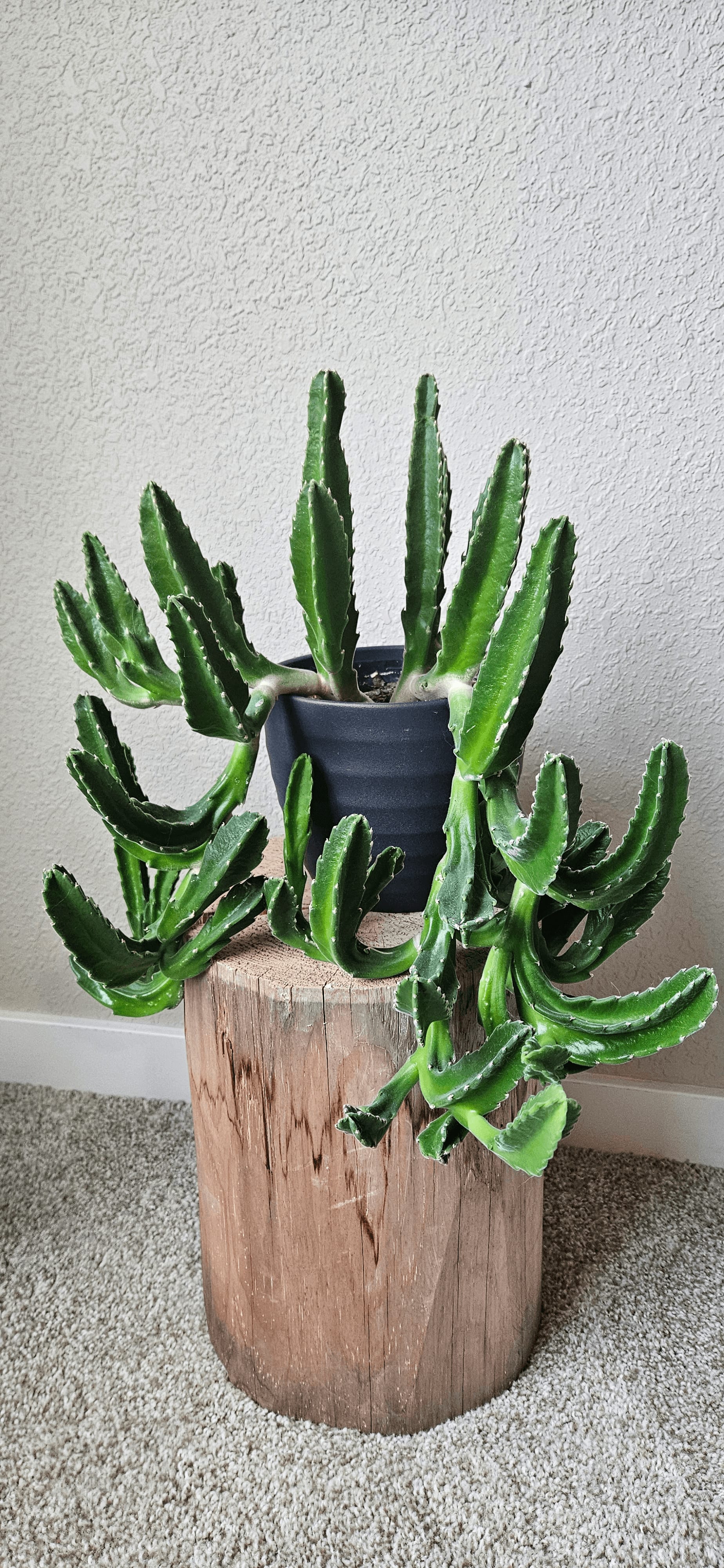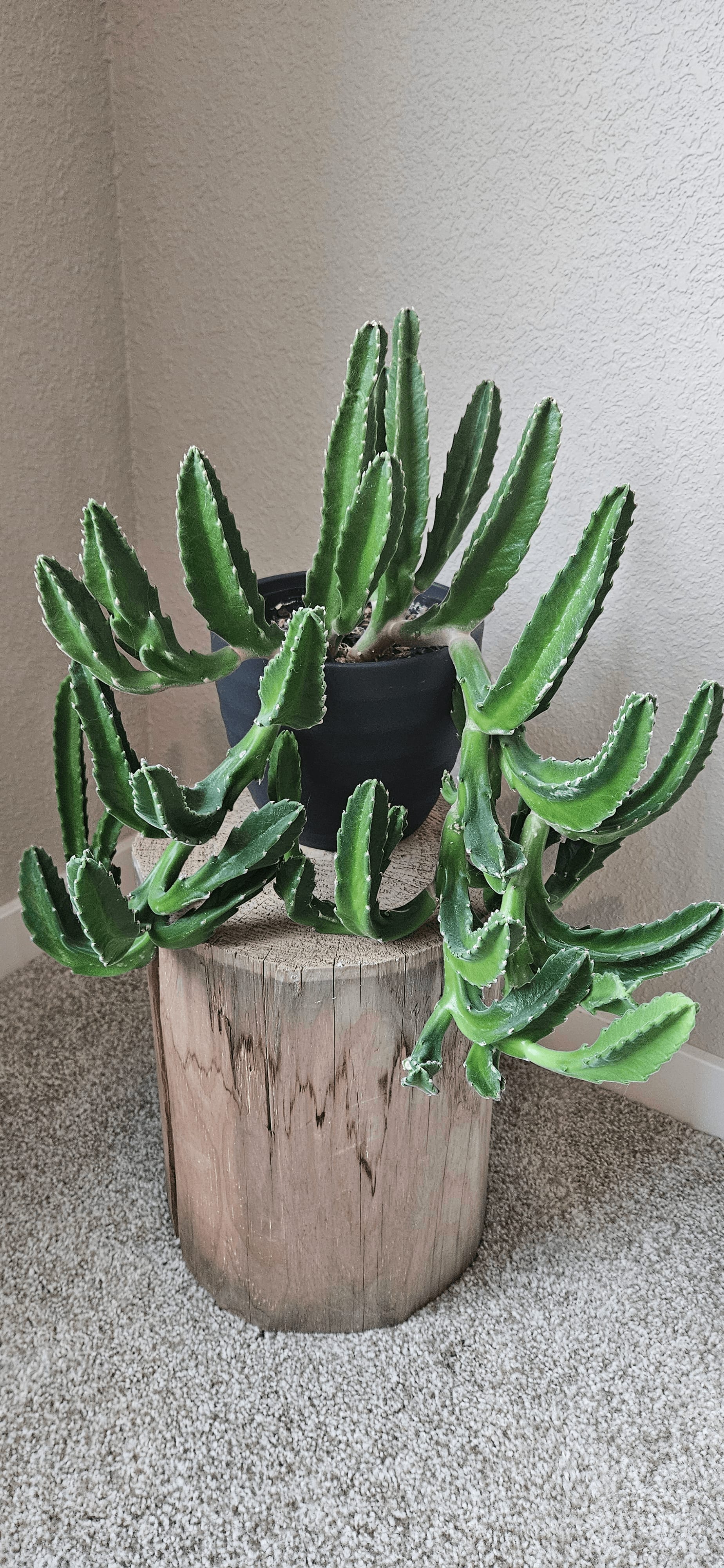
Growing up to 20 cm (8 in) tall, it is a clump-forming succulent with erect green stems 3 cm (1.2 in) thick. The blooms are large star-shaped five-petalled flowers up to 25 cm (9.8 in) in diameter. The flowers are red and yellow, wrinkled, with a silky texture and fringed with hairs, that can be as long as 8 mm (0.3 in). They bloom in autumn, triggered by the shorter daylight hours.
The flowers have the smell of rotting flesh, in order to attract the flies which pollinate them. Scent compounds of carrion flowers responsible for their odour include diamines (putrescine and cadaverine), sulfur compounds and various phenolic molecules. Because of the foul odor of its flower, S. gigantea can act as an appetite suppressant in humans.
There have been several proposed reasons for the size of the flowers of S. gigantea. First, it is possible that they are large to attract the flies that pollinate them. The large size and color of the flowers combined with the carrion smell may cause the flies to behave as if it is a dead carcass and be more likely to visit it.
![Image of the [object Object] plant](https://res.cloudinary.com/dy8loseyh/image/upload/f_auto,q_auto/v1720042025/stank_3678aba2a7.png)
Photo credit to Lauren Keller
Stapelia Gigantea
Apocynaceae Family
Also known as Stapelia Gigantea
Stapelia gigantea is a species of flowering plant in the genus Stapelia of the family Apocynaceae. Common names include Zulu giant, carrion plant and toad plant (although the nickname "carrion plant" can also refer to Stapelia grandiflora). The plant is native to the desert regions of South Africa to Tanzania.
This plant is a
succulent
Dry
Soaked
These plants don't need much water. Water every month or so but only when the soil is bone dry or the plant is starting to droop.
Shade
Direct
Full sun all the time for these stinky succulent's.
Starved
Full
Living natively in arid climates, these plants don't need much fertilizer.