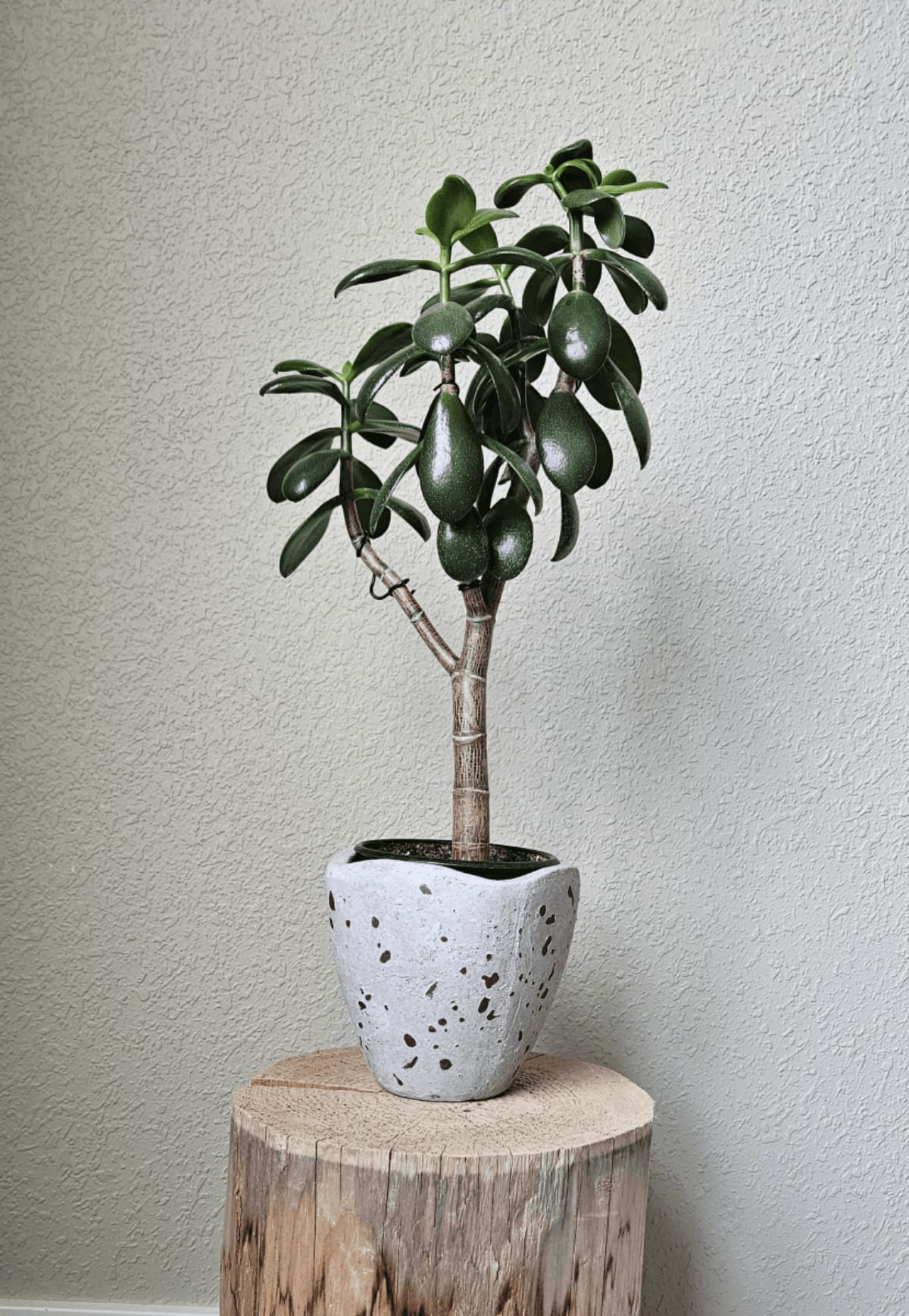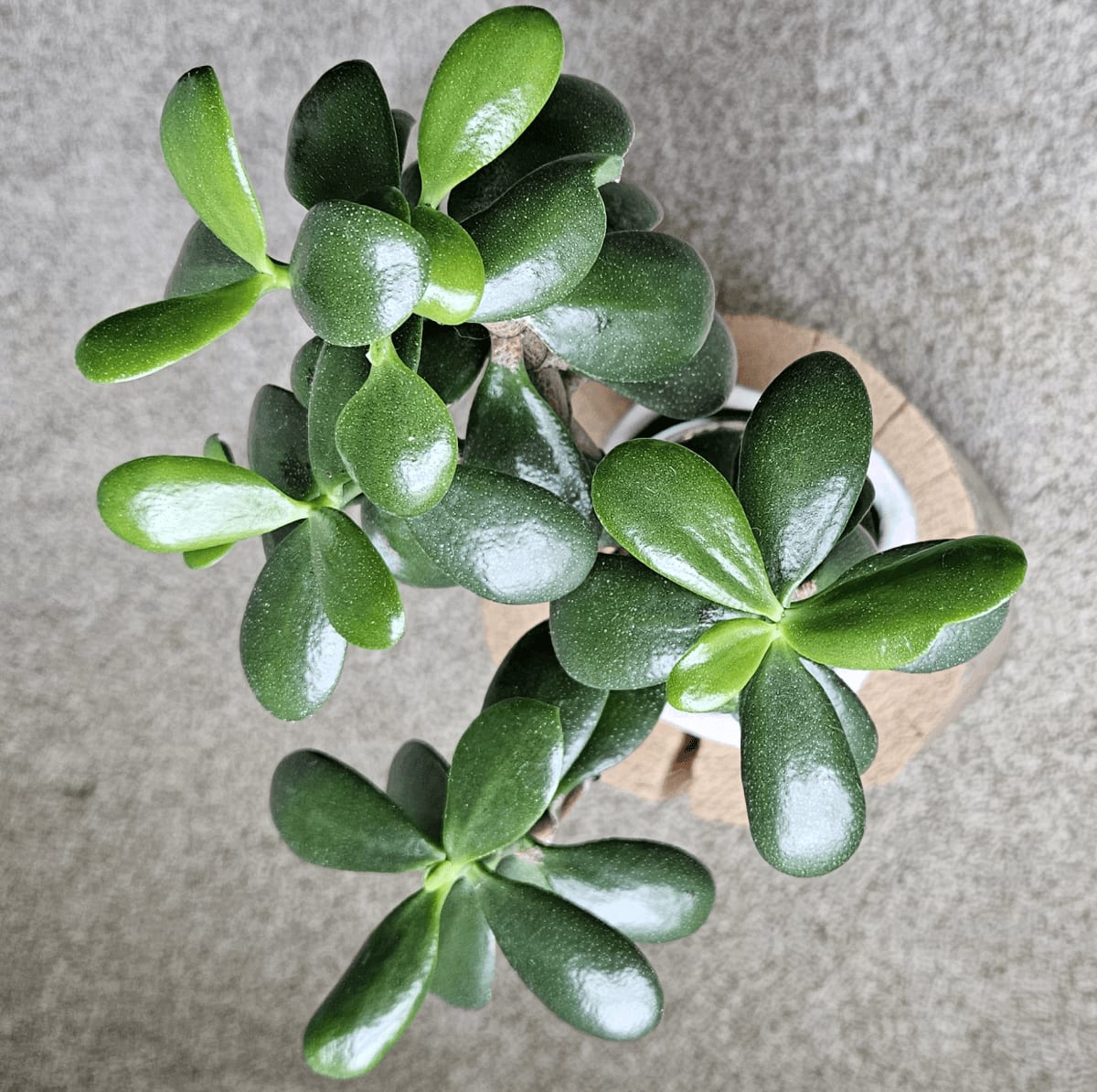
The jade plant is an evergreen with thick branches. It has thick, shiny, smooth leaves that grow in opposing pairs along the branches. Leaves are a rich jade green, although some may appear to be more of a yellow-green. Some varieties may develop a red tinge on the edges of leaves when exposed to high levels of sunlight. New stem growth is the same color and texture as the leaves, becoming woody and brown with age.
It grows as an upright, rounded, thick-stemmed, strongly branched shrub and reaches stature heights of up to 8 ft. The base is usually sparsely branched. Sometimes a single main trunk of up to nine centimeters diameter is formed. The succulent shoots are gray-green. The bark of older branches peels off in horizontal, brownish stripes. Although becoming brown and appearing woody with age, stems never become true lignified tissue, remaining succulent and fleshy throughout the plant's life.
![Image of the [object Object] plant](https://res.cloudinary.com/dy8loseyh/image/upload/f_auto,q_auto/v1719953553/jade_plant_a9a8357a0f.png)
Photo credit to Lauren Keller
Crassula Ovata
Crassulaceae Family
Also known as Jade Plant
Crassula ovata, commonly known as jade plant, lucky plant, money plant or money tree, is a succulent plant with small pink or white flowers that is native to the KwaZulu-Natal and Eastern Cape provinces of South Africa, and Mozambique; it is common as a houseplant worldwide. Much of its popularity stems from the low levels of care needed; the jade plant requires little water and can survive in most indoor conditions.
This plant is a
succulent
Dry
Soaked
Water after the soil is bone dry. These plants are drought resistant.
Shade
Direct
Succulents thrive in full sun.
Starved
Full
These plants are used to arid conditions. If you fertilize, only do so once during the growing season.