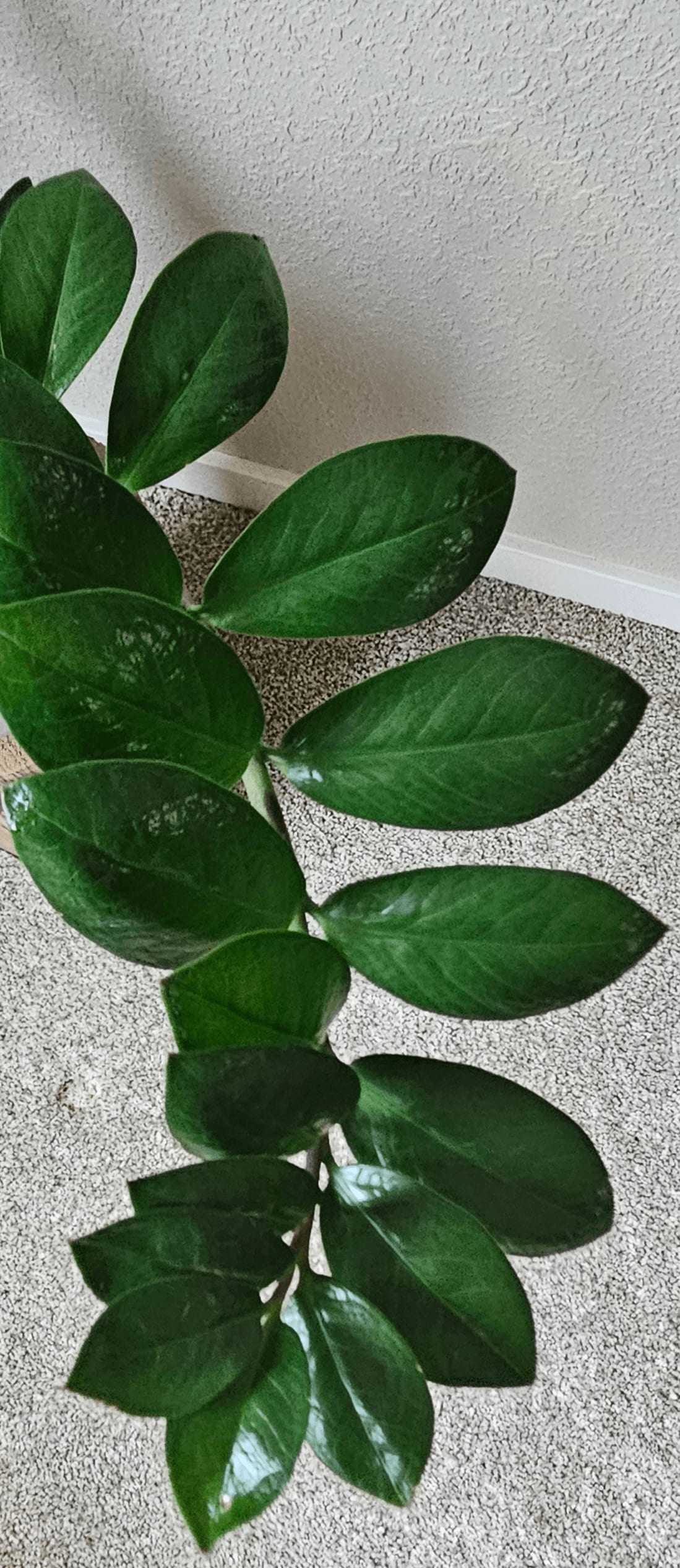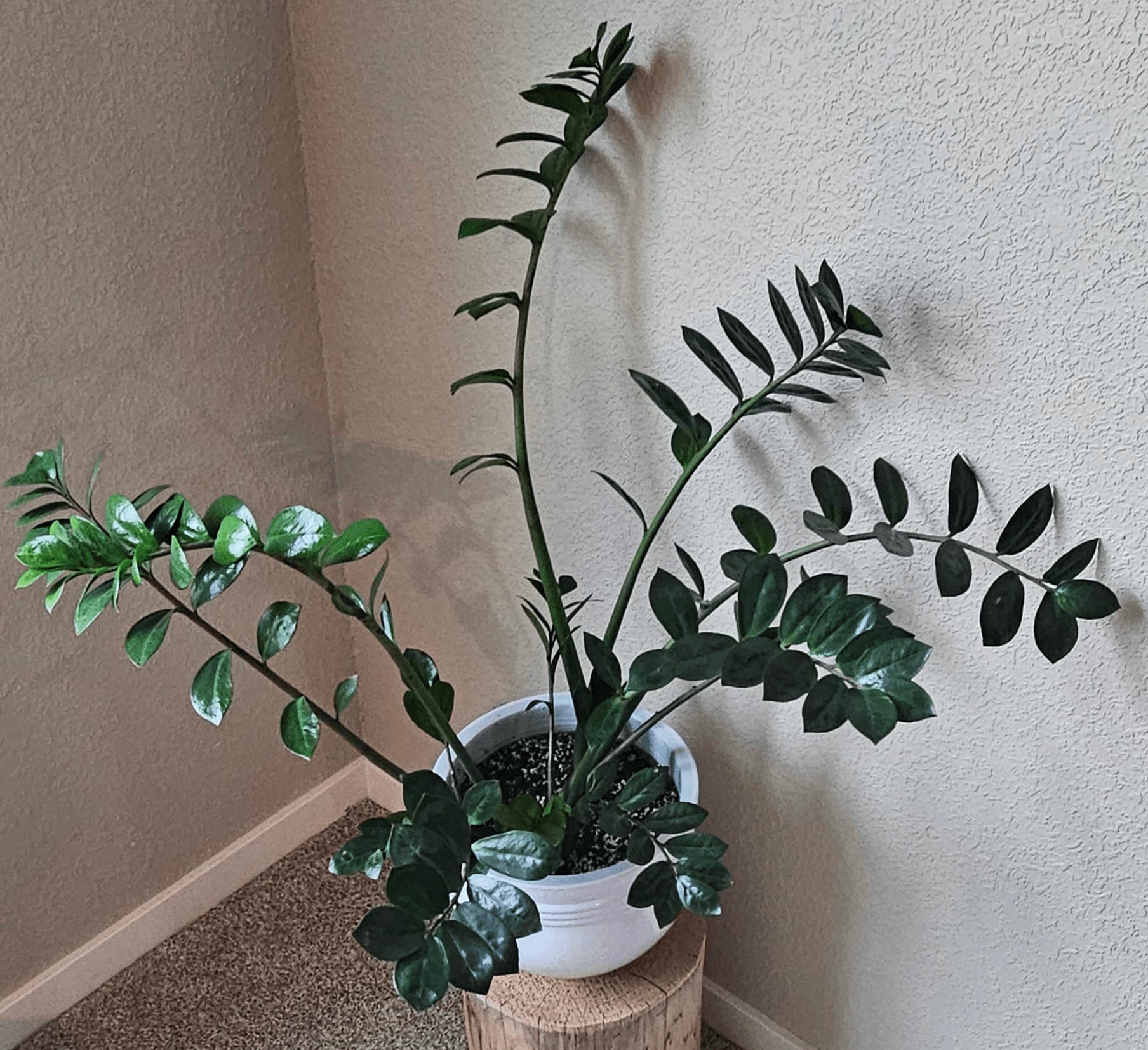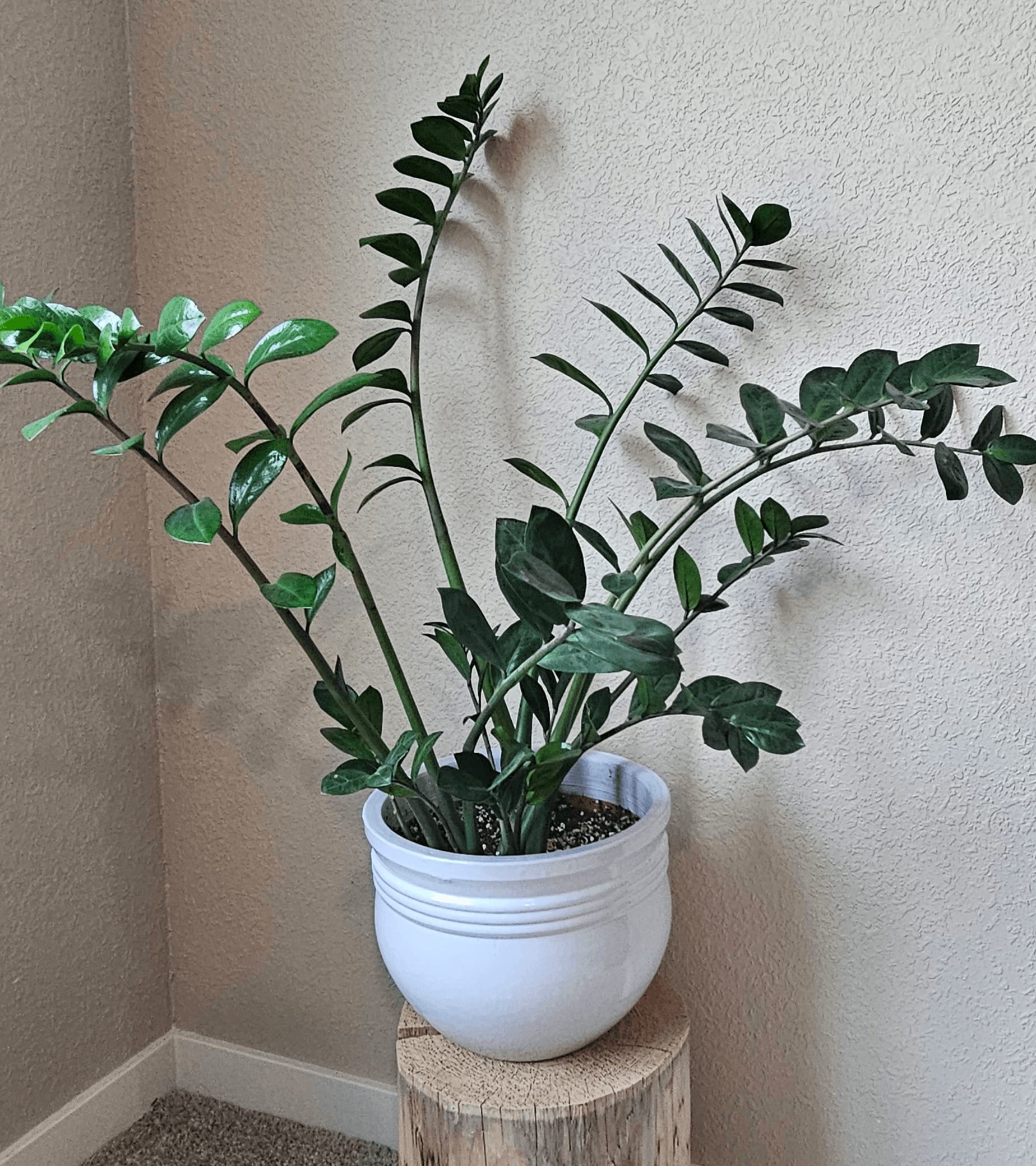
It is a herbaceous perennial growing to 45–60 centimetres (18–24 in) tall, from a stout underground, succulent rhizome. It is normally evergreen, but becomes deciduous during drought, surviving drought due to the large potato-like rhizome that stores water until rainfall resumes. The leaves are pinnate, 40–60 cm (16–24 in) long, with 6–8 pairs of leaflets 7–15 cm (3–6 in) long; they are smooth, shiny, and dark green. The stems of these pinnate leaves are thickened at the bottom.
The flowers are produced in a small bright yellow to brown or bronze spadix 5–7 cm (2–3 in) long, partly hidden among the leaf bases; flowering is from mid summer to early autumn.
Zamioculcas zamiifolia contains an unusually high water contents of leaves (91%) and petioles (95%) and has an individual leaf longevity of at least six months, which may be the reason it can survive extremely well under interior low light levels for four months without water.
The roots of the plants are rhizomatous and have the ability to store moisture, thus aiding the plants in their drought resistance. For this reason, the plant should be watered only when it is dry, to avoid overwatering. A commonly-held notion among gardeners is “If you water the ZZ plant more than you pay your rent, it’s too much” (I.e.; once a month, possibly twice, watering is more than sufficient). They also require superior drainage, with lots of chunky, rocky and inert materials mixed into their soil. They’re known to survive in relatively dark, indoor areas of homes and buildings, and can live in full shade to indirect sunlight. However, lower light is not optimal in most cases; insufficient amounts of sunlight can result in leaves lengthening and/or falling off, yellowing (chlorosis), and generally uneven or disproportionate growth (as the plant stretches towards a light source).
![Image of the [object Object] plant](https://res.cloudinary.com/dy8loseyh/image/upload/f_auto,q_auto/v1720048132/zz_5ce3d45531.png)
Photo credit to Lauren Keller
Zamioculcas Zamiifolia
Araceae Family
Also known as ZZ Plant
Zamioculcas is genus of flowering plants in the family Araceae, containing the single species Zamioculcas zamiifolia. It is a tropical perennial plant, native to eastern Africa, from southern Kenya to northeastern South Africa. Common names include Zanzibar gem, ZZ plant, Zuzu plant, aroid palm, eternity plant and emerald palm.
This plant is an
evergreen perenial
Dry
Soaked
ZZ plants are extremely drought tolerant. That being said, they like their soil to dry out completely between waterings so the rhizomes have capacity to store more water.
Shade
Direct
Mine typically does well away from any windows and in the middle of my apartment. Probably 6-10 ft is where this ranges.
Starved
Full
They can live without fertilizer. But if you want, you can fertilize them once or twice a year during the growing season.